









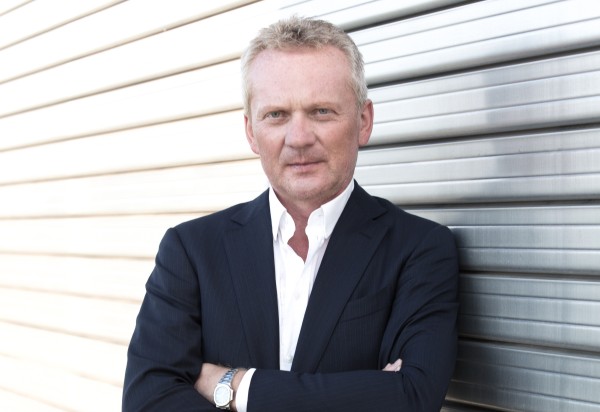

A conversation with Mr. Arkadiusz Muś, the owner and the chairman of the Press Glass management board.
I’ve recently listened to the opinions of German and Italian managers, expressing their concerns about local markets being taken over by Polish export. I am under the impression that they have not yet matured enough to understand the idea of Europe as one joint market, as suggested by Arkadiusz Muś, this issue’s guest. Germany seems to forget that Polish windows have German fittings; still German, although more and more often we find that profiles, and even the Western solution of glass packages, are produced in Poland. They don’t realize that windows or doors from Poland are being produced on German or Italian machines, transported in German, Swedish or Italian vehicles, assembled using non-Polish tools and rarely made from exclusively domestic draught proofing materials. What arouses the concern of Western managers is the few percent representing Polish windows on their market, while they are pleased having over 30 percent of the market shares in Poland thanks to their skylights or gates. Well, such is the philosophy of Kali from the Common Market.
I admit that I have stopped getting upset over all the grumbling about Polish competitors and I am supporting the successes of Polish companies even more now. I support good, Polish engineers and good, also Polish, structural solutions. Just to be clear: I also support good assembly solutions, modern architectural designs as well as the more and more common automation in woodwork, regardless of the country of its origin. The recent Entrepreneurship Congress in Brussels showed that they have no reason to fear each other – it is the officials and the law they pose that are the real threat. Another one is the lack of mature marketing, lack of knowledge about the market, the incompetent use of modern media or incorrect contracts formulation. And other entrepreneurs? They are only competitors. What difference does it make if the market shares are taken away by a Pole, a German or an Italian? I would probably even prefer, if it was an honest Italian from Milan, rather than a dishonest Pole from Warsaw. Which, with strong beliefs, I also recommend that you consider.
R.K: You have been running your business from the beginning of the nineties, at first only in Poland, now in all of Europe. The years go by and you are more and more active. What is it that makes you hold on to this?
A.M: Above all, the pleasure of creative work in a circle of competent people. I simply find fulfillment in it. I am surrounded by a group of excellent managers, with whom I have very good contact, and this makes them perfect conversation partners for me. I learn a lot from them, and since they understand me and my business intentions perfectly, it creates a climate in which we can freely discuss chances and threats, prospects and directions of development. I can’t place a value on the work of the people I presently employ. Every one of them is a really strong point of the company and they form a team. I am really proud of them. I wouldn’t be able to create such a large organization, with such great potential, if I didn’t have a group of managers who understand one another. This is the most important thing for the further development of Press Glass.
R.K: You are currently expanding your biggest factory in Poland, building a new factory in Croatia… does development have any limits for you?
A.M: So far I don’t see these limits, and I certainly don’t set them for myself. I am building a supra-generational company, so my prospect for this business isn’t only for today, but goes far beyond the current generation. This is probably one of the factors of my success in this business. It also gives the right perspective to the managers of my company who are aware that if together we are good at what we do, we have a chance to develop together for another 50 years. This is thanks to the fact that managers know the pace the company will be developing at, in which direction it will be headed, and also know how their own professional lives can develop. So if you are asking about the of development of my company, then even in this long-term perspective, I still don’t see them. From our point of view we are still at the beginning of the road.
R.K: Not really “at the beginning”, having been a crucial player on the European market for a long time now.
A.M: Press Glass has only been around for 23 years, so if you were to relate this road to the age of a man, you could say it is still a youthful age. And that’s is how I see it, that after 25 years since Poland gained its independence, our business has gone through preschool, schools and is now at the stage of graduating from university – entering adulthood. It is a good time to embrace all the assets we have, to draw conclusions from what we have learned and from practical experience, and only now decide what we want to achieve in this “adult” business, which road we will take.
R.K: Oh, I’m afraid many entrepreneurs would like to stick to these academic references, to remain “eternal” students…
A.M: At some point this is no longer possible. In the beginning you can develop a company with enthusiasm, intuition, entrepreneurship, more with bravado than business knowledge. To learn business from your own mistakes and, as it is at school, to make more mistakes in the process. After many years of gaining knowledge and experience, when you are finally a grounded entrepreneur and business “studies” have ended, it’s the best time to take the next step. If you already have capital, experienced managers, speak foreign languages, know Europe and the world, are able get around in the world of the business, it’s the best time to, once again, give your business some thought and start it anew, with a new level of abilities, experience and possibilities.
R.K: I’m guessing that the idea of graduate Muś is further expansion of export?
A.M: Not at all. The mistake in your assumption lies in the fact that we stopped dividing our activity into domestic and foreign a long time ago. We are simply operating on one, shared European market and we are selling everywhere, where we have customers. It doesn’t matter where we sell, because we can be the leader on any market in Europe. The place of production, in this case, is a secondary issue. I know many companies in Poland who are selling all of their products abroad, and among them are also departments of German, Scandinavian or Swiss companies. So how should we treat their products? As Polish exported goods? Such categorization is already anachronistic and we should stop thinking of selling in categories of export. We have one joint European market.
R.K: Have Polish windows conquered Europe in your opinion?
A.M: The topic of Polish windows keeps emerging in conversations with western managers. However, they don’t treat Polish brands as competition based on a reliable marketing idea. They perceive Polish producers generally as suppliers of the cheapest woodwork. They see them, and probably rightly so, as enterprises which are still at the beginning stage of the road to success. They are aware that the present state of the market, which Polish window producers are capitalizing upon by increasing export, will end with time. Polish producers should keep their cool, because according to media, the window industry in Poland is perceived as dynamic now, as the leading exporter, but it is necessary to look at the situation objectively and to see who plays a part in it and to what degree. On the road to the lasting success of Polish windows on the market, it is still the initial stage, additionally, often with no plan that would offer the opportunity of strengthening their current success in the perspective of many years.
R.K: What, in that case, is your view on the development possibilities of Europe-wide sales made by woodwork producers from countries trying to catch up with the strongest European economies?
A.M: In every trade there is a group of companies which grow because they have some plan of action, or find themselves some kind of market niche. There are also companies, which despite having experience on the market, still don’t have any idea on how to strengthen their development. In Poland, such companies, for which the price was the only idea for functioning, are mostly gone – they went bankrupt or are about to go bankrupt. The ones, which took over markets in Europe with only the price, will also have trouble with time, unless they change their strategy. Poland is, at present, a big “exporter” of windows, but Polish producers should seek the possibility of offering such products and services where they will be able to achieve bigger profit margins. This is the way that, in my opinion, all growing producers, who dream of Europe-wide sales, should act, regardless of their country of origin. We have to keep in mind that in every developing economy, advantages taken from lower labour and manufacture costs will eventually end – and what then? It is already necessary today, to ask ourselves the question: what would our business look like, if labour and production costs suddenly rose by 20-30-50 percent? How would we function then? Would we still be considered competition? That is why it is necessary to think now about what will happen in the industry in 3 years, in 5 years. It is necessary to think about the direction of our future investments, our differentiators and productivity.
R.K: And according to you, what will happen in the perspective of the next several years?
A.M: It is my belief that the integration of the entire Europen market will deepen. In this perspective there will no longer be domestic markets, but one integrated market of the European Union. That’s why producers should stop thinking about their domestic markets, about export/import, and should start thinking about the common European market, including all the consequences and opportunities that are to come. I will give you an example from our company. When, in the past, we contemplated starting up production on the Scandinavian market, it turned out that we didn’t have the slightest chances, because the local labour costs didn’t allow us be competitive. Local producers, at comparable labour costs, would have been much better than us, so that meant that their productivity, organization and their approach to work could easily win against ours. This was also a warning and lesson for us.
R.K: So if not price, then what?
A.M: See, this is exactly what a good manager’s job is – to think of that “something”. There are, after all, examples of those who are able to base their entire business on some differentiator, special offer and sales network, on some niche which the given market needs. The area, which will always continue to develop and bring higher profit margins, is the premium segment. According to my observations of the European market, the best companies, generating the highest profit margins with their products, are investing primarily in the development of their core business, in the part which has the best chance to improve their competitiveness, to create a unique offer based on engineering knowledge, an attractive design and communication. You can see how some of the solutions, until recently reserved only for the facade market, are being modified to suit the needs of the window frame industry. In designing, we can observe a tendency of creating smooth, uniform surfaces, fitted with glass, with less and less visible structural elements. I believe that the investment decisions and developmental works of window producers in search of differentiators should also be headed in such a direction. By choosing their directions of investment, growing window producers can draw from the experience of Western companies which have already passed the initial stage of development. It will allow them to avoid making the same mistakes and generating losses resulting from the withdrawal from their decisions. Bad investments, which don’t influence or influence competitiveness in only a slight degree, are like a wasted opportunity. I also live by this principle when running my company. I invest in the technologies and the development of products which are tied to my core business, and which strengthen Press Glass’s differentiators and the competitiveness of my recipients. I am building up the power of the largest factory in Poland, e.g. in the production of glazing glass units, and I’m building a factory in Croatia, because I’m counting on the development of my company in this part of Europe. I also know that the long-term experience of Western companies, from which I am also drawing knowledge, is pointing at the fact that it isn’t worth it for window producers to invest in their own production lines of glazing glass units, so I’m counting on a growth of interest in my products.
Another thing that’s clearly visible in Poland nowadays is the progressing consolidation, manifesting itself through the takeover of Polish units by foreign companies and the placement of their own products in Poland. Perhaps not everyone passes business “studies” with distinction, not everyone received a “diploma” and is ready for upcoming challenges. All the more, that person thinks about his or her future steps. As for Polish window producers, perhaps the most important question before them today is: should I carry on with this business or should I possibly try selling it? I think that many Polish producers are facing this dilemma today.
R.K: But if everyone thought that way, in the end there be no Polish window or door factories! The same in other developing countries.
A.M: For me, the most important thing is that there are large window producers developing in Poland, regardless of who is investing, regardless of the origin of capital. Capital is international, it knows no borders. For me it doesn’t matter who will produce windows in Poland, just like it doesn’t matter who will produce the glass. I don’t share the opinion that Poles have to produce everything – the window, the fittings and the glass – as some claim. I don’t believe that Poland is only for Poles, because if that was the case, then consistently Denmark would be only for Danes, and Germany only for Germans. It’s similar with the choice of products. The key should be, above all, quality, creating a suitable offer, and brand differentiators that cater to the needs of the recipient, because this stimulates healthy competition. Choosing a product based on the place of production or origins of the brand, often for patriotic reasons, leads to lower expectations from the products and reduces the competitiveness of producers. Of course, if we have two completely equal products or brands to choose from, we may take into account the country of production. However, in practice, this kind of situation is a very rare occurrence. There’s almost always something that makes one product stand out more among the others in our eyes. It’s also necessary to remember that what sometimes may seem the most familiar and native to us, and thus best for the local market, is not always the case.
Today, Velux windows produced in Poland might be more Polish and offer our country more than the windows of local producers.
Therefore, I emphasize the fact that thinking in nationalistic terms can lead to a dead end in business.
R.K: So maybe not in nationalistic terms, but at least in terms of family, relying on the inheritance, on passing down companies to children?
A.M: The fact that company owners are appointing their children as the managers responsible for their companies, also may prove to be a dead end. Often it would be better, if these children could find fulfilment in other fields and not ruin business. Unfortunately many owners make this mistake; they pass their company’s management on to a person not because of their high qualifications, but because they share the same surname. When everything is going well, when there is development, then even the bigger mistakes in management might not pose a problem. It’s worse when it isn’t, when you have to to tighten your belt, and when family solidarity in this isn’t always equal in everyone’s case. For me, it’s about competence above all, that’s why I don’t think you should hire family just because they are family. Unless it just so happens that your family members are extraordinary managers, which, after all, is a possibility we shouldn’t rule out. This is why I always find it fascinating to observe how things develop in some of these family corporations. For me, these are always interesting cases of running a business.
R.K: Or maybe not everyone has to be a leader in the field, not every company has to be No. 1?
A.M: They don’t have to, but they won’t last long if they don’t aspire to be. Of course, up to the standards of their business size. If I sell glass panes, but I’m not No. 1 or 2 in the area I’ve chosen, regardless of whether it’s a district, a city, a province, a country or a continent, if I have no chances of being at the top, it means I should switch to an industry in which I will have those chances. And if I don’t want to change the industry, I must change the district, city, country or continent to one in which I have chances becoming a leader in my field. As long as I have the chance of being No. 1 or 2 on the market I’ve chosen, it is a promising business. If I don’t have this chance, it means that I must find another market for myself, and as an entrepreneur, I must define it myself and aspire to become the leader on it. Other goals won’t offer my business secure stability. So if Europe is my market, I have to be a European leader.
R.K: Which is what I wish you and the company with all my heart. Thank you for the conversation. Robert Klos
Additional information about company.
Press Glass operates in the area of processing flat glass for construction. The company’s products exist on the markets of the majority of European countries, as well as outside of Europe, in North America and Asia. The company’s capital is concentrated in the hands of the sole, Mr Arkadiusz Muś. The main recipients are the producers of window frames and doors, and companies producing glass facades and indoor glazings of various types. The company also makes glass panes for the producers of solar and photovoltaic panels, as well as companies which use toughened, single glazing glass in large expanses. The enterprise is constantly introducing new individual systems of service and is enhancing its performance abilities. Mr. Arkadiusz Muś, the owner and the chairman of the Press Glass management board
